
Real Estate Ownership Laws for Non-Saudis 2026
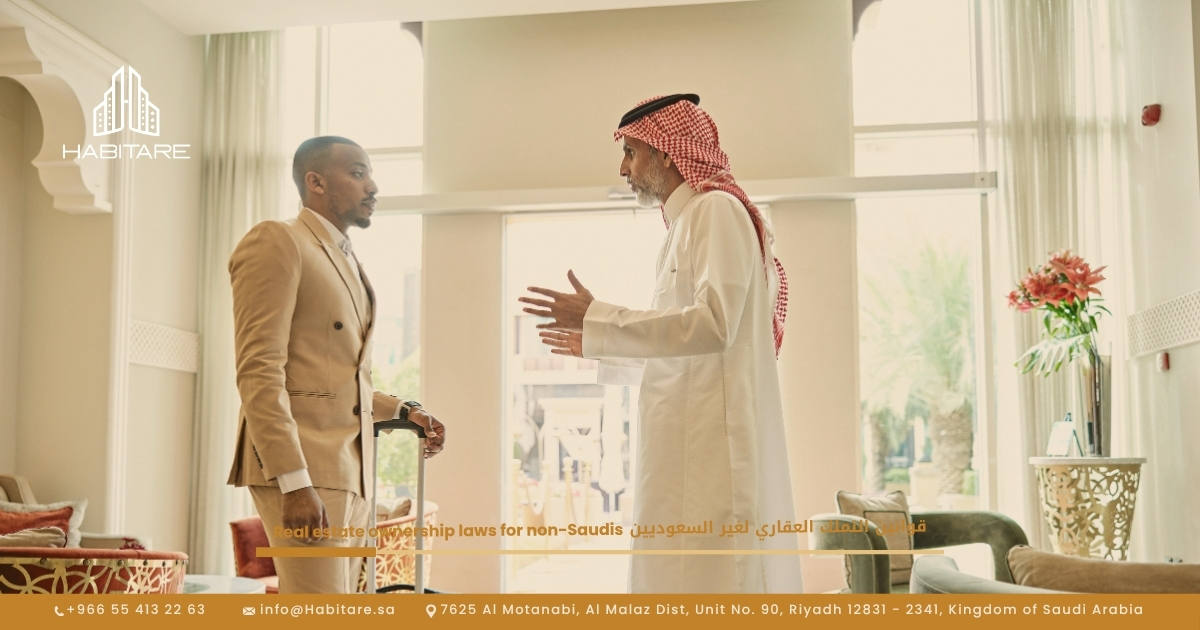
In a historic move to strengthen its position as a global investment hub, Saudi Arabia has redefined its Real Estate Ownership Laws for Non-Saudis through a new, forward-looking regulatory framework.
This reform reflects Vision 2030’s commitment to welcoming global investors into the Kingdom’s real estate market, promoting transparency and sustainable long-term growth.
The new system opens wide doors for international capital to enter Saudi Arabia’s property sector under clear and structured regulations designed to support the Kingdom’s ambitious goals for urban development and economic diversification.
Understanding these laws is essential for any investor considering real estate in Saudi Arabia. In this article by Habitare Real Estate, we present a comprehensive overview of the new ownership regulations and what they mean for international investors.
Overview of the New Real Estate Ownership Laws for Non-Saudis
On July 8, 2025, the Saudi Council of Ministers approved the new Real Estate Ownership Law for Non-Saudis, followed by the issuance of Royal Decree No. M/14 for 2025.
This new law officially replaced previous legislation that conflicted with the updated framework, particularly the former Royal Decree No. M/15 issued in 2000.
The updated law, consisting of 15 articles, was published in the official gazette Umm Al-Qura on July 25, 2025, and will take effect 180 days after publication.
Who Qualifies as a Non-Saudi Eligible for Property Ownership?
The law defines “Non-Saudi” broadly to include:
- Any natural person who does not hold Saudi nationality.
- Non-Saudi corporations.
- Non-Saudi non-profit entities.
- Any foreign legal entity authorized by a resolution of the Council of Ministers.
»Read also:
The Required Investment Amount in Saudi Arabia for Foreigners
Key Highlights of the 2026 Real Estate Ownership System for Non-Saudis
1. Geographic Scope and Property Rights
The Council of Ministers will define the geographic zones where non-Saudis may own property, as well as the types of property rights permitted, the maximum ownership percentages, and the duration of usufruct rights.
2. Ownership Rules in Makkah and Madinah
Property ownership in Makkah and Madinah is restricted to Muslim individuals.
However, both listed and unlisted Saudi-registered companies under the Saudi Companies Law are permitted to own real estate in these cities.
3. Ownership by Companies and Investment Funds
Listed companies and real estate investment funds (REIFs) must comply with the rules of the Capital Market Authority (CMA) when acquiring property.
4. Ownership Rights for Resident Foreigners
Non-Saudi residents with valid residency permits, as well as their dependents, are allowed to own one residential property for personal use within the Kingdom.
5. Transaction Fees for Non-Saudi Property Transfers
- Residential property: 2.5% fee in Riyadh, Jeddah, Makkah, and Madinah.
- Commercial, industrial, and agricultural properties: 0% fee in those same cities.
- In special economic zones: 2.5% fee applies to investment-use properties, while residential units are exempt.
- In other regions of the Kingdom: 0% fee on both residential and investment properties.
Read more: Residency in Saudi Arabia Through Property Ownership
Executive Regulations and Penalties for Violations
The updated system includes clear penalties for non-compliance, ensuring transparency and accountability.
1- False or misleading information:
Fine of 5% of the property value (up to SAR 10 million) or mandatory sale of the property.
2- Overstating property needs:
Companies partly owned by foreigners may face fines between 0.5% and 1% (up to SAR 2 million).
3- Obstruction or non-cooperation:
Individuals or companies hindering inspections may face warnings or fines of up to SAR 500,000.
4- Failure to update ownership records:
Non-Saudi entities that do not report changes in ownership may face fines of up to SAR 1 million.
Investors are strongly advised to stay informed about executive regulations and any amendments to ensure full compliance with Saudi property laws.
Read about: Is It Possible to Buy Property Through Power of Attorney in Saudi Arabia?

Owning Property in Saudi Arabia with Habitare Real Estate
Understanding the executive regulations and Real Estate Ownership Laws for Non-Saudis requires not just legal knowledge but also deep insight into the Saudi property market.
At Habitare Real Estate, we combine investment foresight with legal expertise to help you navigate this evolving market confidently.
We don’t simply sell properties; we act as your trusted partner, ensuring every step from due diligence to title transfer is managed with care and precision.
Our mission is to make your property ownership journey seamless, transparent, and aligned with Saudi Arabia’s new real estate framework.
Contact us today, and let our team translate complex legal processes into clear, actionable steps toward your next investment opportunity in the Kingdom.
Edited by Habitare Real Estate©
Sources:
Frequently Asked Questions about Real Estate Ownership Laws for Non-Saudis
Can a non-Saudi buy a home in Saudi Arabia?
Yes. A non-Saudi resident can purchase one residential property for personal use within the Kingdom.
Can non-Saudis own property in Makkah?
Yes, Muslim individuals are permitted to own property in Makkah under the 2026 Executive Regulations.
Can non-Saudis own property in Madinah?
Yes, Muslim foreigners may own real estate in Madinah, as permitted by the 2026 Real Estate Ownership Law for Non-Saudis.