
Does Real Estate Investment in Madinah Attract Muslim Investors?
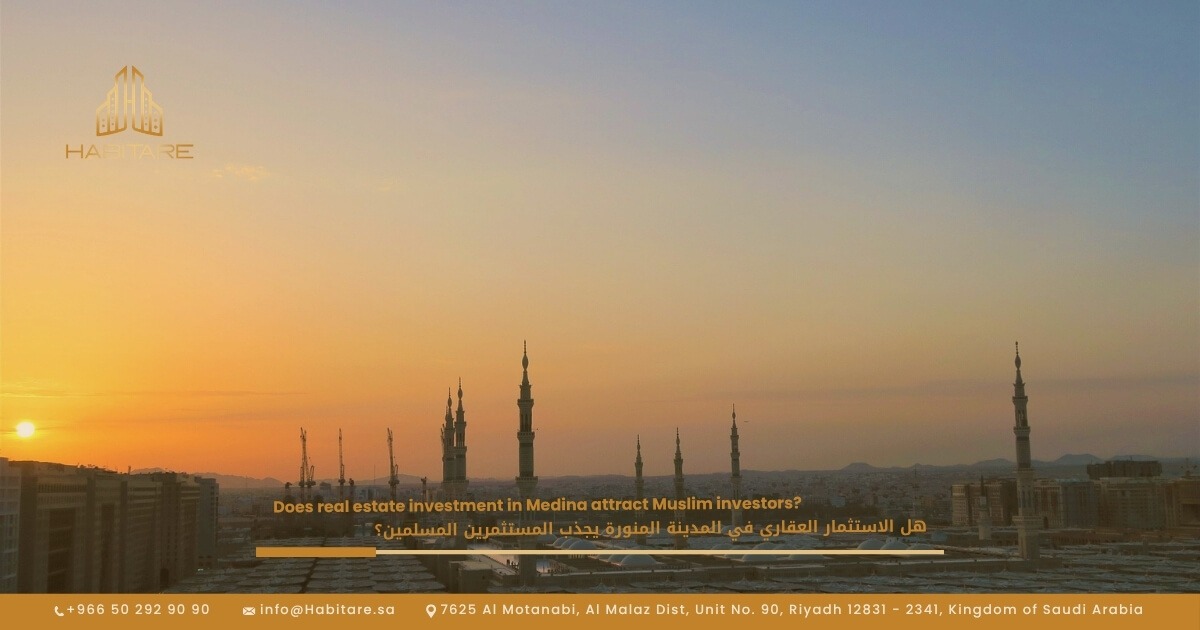
Real Estate Investment in Madinah is entering a new chapter as Saudi Arabia opens new pathways for non-Saudi property ownership and international interest in the city continues to grow.
At the same time, multibillion-dollar estimates of potential capital targeting Saudi real estate and the two Holy Cities are bringing renewed attention to Madinah’s investment landscape.
Madinah is now ranked among the leading Saudi cities attracting global investors interested in purchasing property.
According to Knight Frank’s 2026 report, 43% of respondents identified Madinah as a target city for property ownership, compared with 55% for Riyadh and 46% for Jeddah. Makkah attracted interest from 41% of respondents.
In this article from Habitare Real Estate, we explore the latest developments shaping the Madinah property market and the opportunities that may emerge as Saudi Arabia’s real estate landscape enters a new phase.
Why Is Madinah Attracting Muslim Real Estate Investors?
Madinah holds a distinctive appeal among Muslim investors that extends beyond general international demand for Saudi real estate.
Knight Frank’s research found that 63% of Muslim respondents preferred Madinah as a destination for property ownership, compared with 59% who selected Makkah.
This places Madinah in a particularly strong position among international Muslim investors seeking a meaningful connection between property ownership, lifestyle, and one of the world’s most significant spiritual destinations.
Interest also varies across investor nationalities. Madinah recorded particularly strong interest among respondents from the United Kingdom, where 59% expressed interest in purchasing a home, followed by Malaysia at 58%.
Makkah, meanwhile, ranked more strongly among respondents from India at 56% and Algeria at 45%.
Madinah’s appeal becomes even more pronounced among certain higher-income groups. Preference reached 86% among respondents with monthly incomes between $17,500 and $22,500.
These figures highlight the city’s growing appeal among selected segments of affluent international buyers.
Non-Saudi Property Ownership Opens the Market to New Investors
Saudi Arabia’s system governing non-Saudi property ownership entered into force on January 22, 2026.
The Real Estate General Authority announced the start of ownership applications through the official digital platform, “Saudi Properties,” subject to the applicable legal and regulatory requirements.
The framework includes residents, non-residents, companies, and non-Saudi entities, depending on the ownership conditions and regulations applicable to each category.
Property ownership in Makkah and Madinah remains subject to specific provisions within the system and its implementing regulations.
The regulations establish controls and procedures governing non-Saudi ownership and the acquisition of real estate rights within the Kingdom, including requirements that apply specifically to non-residents.
These provisions also include property ownership in Makkah and Madinah by foreign companies in accordance with the conditions and procedures established under the applicable regulations.
The framework provides a structured approach to the acquisition of real estate rights by foreign companies and non-Saudi entities within the two Holy Cities.
How Much Investment Is Expected in Makkah and Madinah?
Real estate sector estimates suggest that up to $2 billion in investment could be directed toward the property markets of Makkah and Madinah during the coming year.
According to Adeeb Al Muhaimid, Chairman of the Real Estate Development Committee at the Madinah Chamber, this estimate reflects potential investment from wealthy Muslim buyers interested in owning residential property and investing in the two Holy Cities.
It is important to distinguish this estimate from completed transactions.
The figure represents a projection of potential future investment rather than the confirmed value of transactions already completed in the market.
The actual impact of the new ownership framework will require further data on applications, completed transactions, and the value of investments made after the system entered into force.
$6.3 Billion in Global Capital Targets Saudi Real Estate
International interest extends beyond Makkah and Madinah.
Knight Frank’s Destination Saudi 2026 report estimates that approximately $6.3 billion in potential global private capital is targeting real estate investment in Saudi Arabia.
The estimate is based on research involving 1,550 investors from around the world.
The report also identified approximately $1.5 billion in global private capital that had been targeting Saudi Arabia’s residential sector before the onset of regional disruptions.
A further $3.4 billion in global capital was identified as having interest in the branded residences sector.
Together, these figures demonstrate the broadening international interest surrounding Saudi Arabia’s evolving real estate market.
However, the $6.3 billion figure should not be interpreted as capital allocated specifically to Madinah or Makkah.
It represents potential global private capital targeting the wider Saudi real estate market.
The separate $2 billion estimate relates specifically to projected potential investment in the two Holy Cities.
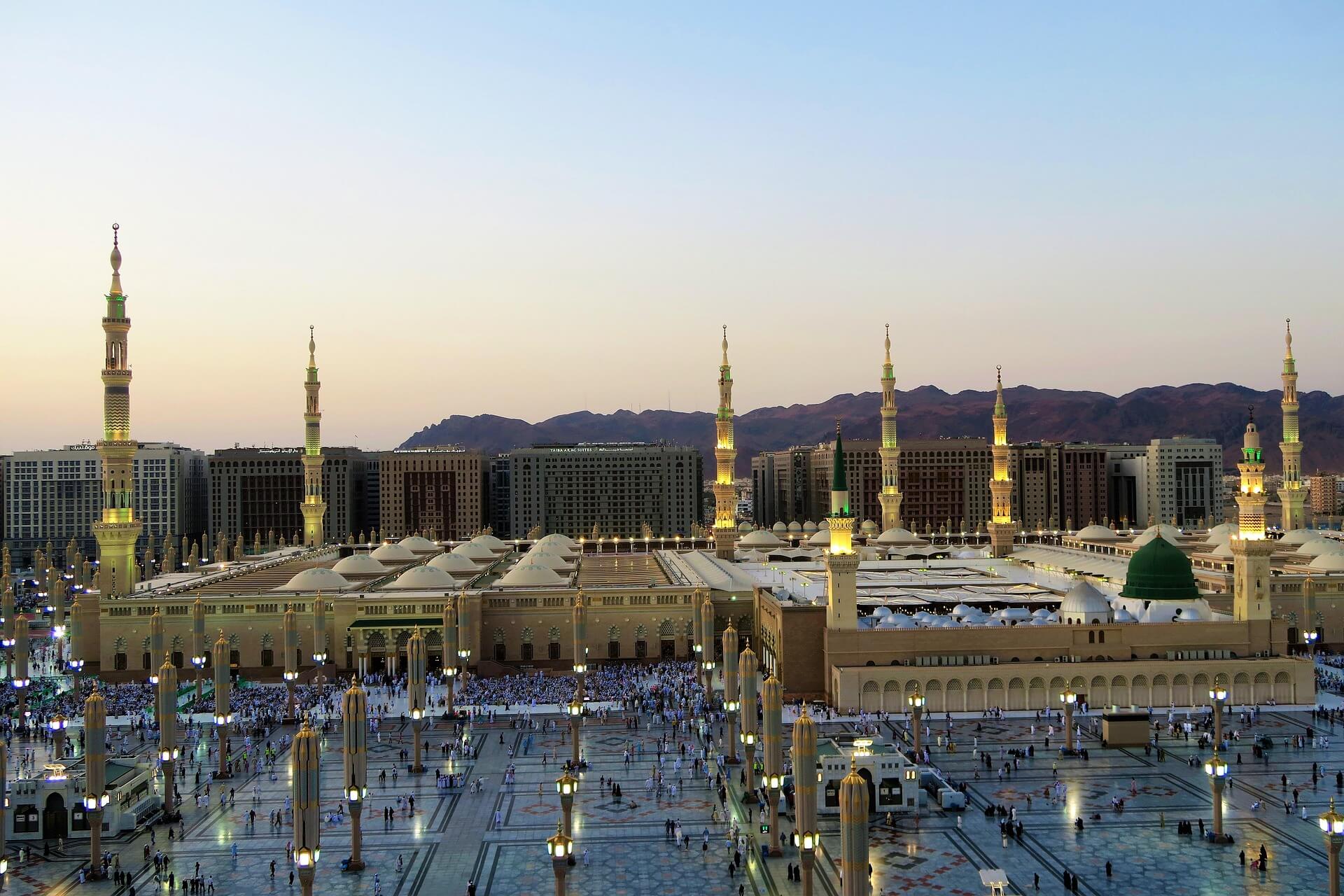
Madinah’s Strong Visitor Base Supports Real Estate Demand
The appeal of Madinah real estate is not driven by investment demand alone.
The city receives substantial numbers of visitors from both within Saudi Arabia and abroad, creating a significant flow of demand connected to religious travel, accommodation, and hospitality.
Madinah recorded 6,452,696 visitors during the first quarter of 2025, including 4,412,689 international visitors.
During the same period, Saudi Arabia recorded 15,222,497 Umrah performers, including 6,523,630 visitors arriving from outside the Kingdom.
This represented a 10.7% increase in international Umrah performers compared with the first quarter of 2024.
The number of domestic Umrah performers reached 8,698,867 during the same period.
These figures illustrate the scale of movement associated with religious travel.
They also help explain the strategic importance of Madinah real estate across residential, hospitality, and visitor-oriented property sectors.
At the same time, visitor numbers alone should not be interpreted as evidence of a specific increase in property prices or investment values.
Their importance lies in the wider demand ecosystem that supports accommodation, hospitality, and services within the city.
250,000 New Hotel Rooms for the Two Holy Cities
Visitor demand is also expected to support significant growth within Saudi Arabia’s hospitality sector.
Knight Frank expects approximately 358,000 hotel rooms to be added across Saudi Arabia over the next five to ten years.
Around 250,000 of these rooms are expected to be located in Makkah and Madinah.
The outlook reflects expectations of continued demand from Hajj and Umrah visitors.
Knight Frank also identifies hospitality as one of the sectors attracting strong interest from international investors, alongside branded residences.
This broadens the range of real estate investment opportunities connected to accommodation and hospitality services in cities that welcome millions of visitors.
Are Real Estate Investment Opportunities in Madinah Expanding?
Current data places Madinah among the Saudi cities attracting growing attention from international investors.
This strengthens Madinah’s position among the investment regions and cities in Saudi Arabia attracting growing interest from international buyers.
Madinah was selected by 43% of respondents as a target city for property ownership.
That figure increased to 63% among Muslim respondents, with particularly strong interest also recorded among respondents from the United Kingdom and Malaysia.
These indicators add significance to the regulatory changes that have opened new ownership pathways for non-Saudis within the applicable legal framework.
Knight Frank suggests that the new ownership system has the potential to create additional opportunities for international capital and strengthen investor participation in the Saudi property market.
However, it may still be premature to describe Madinah as an established global real estate investment hub based solely on current interest levels and investment projections.
The available data primarily measures investor interest and potential capital rather than completed foreign ownership transactions.
A clearer picture will emerge through future data on foreign ownership applications, completed deals, and actual investment activity.
These indicators will help measure how Real Estate Investment in Madinah develops in practice following the implementation of the new system.
What Is the Future of Real Estate Investment in Madinah?
The Madinah real estate market currently stands at the intersection of three important developments.
The first is growing interest from international investors.
The second is the introduction of new pathways for non-Saudi property ownership within Saudi Arabia’s updated legal framework.
The third is the continued flow of visitors and Umrah performers into the city.
Together, these factors provide a foundation for growing interest in investing in Madinah in the years ahead.
The scale of the actual market impact, however, will depend on how ownership activity and new transactions develop.
The projected $2 billion in potential investment and the estimated $6.3 billion in potential global private capital represent future opportunities and investor interest.
They should not be interpreted as funds that have already entered the Madinah property market.
For investors, this makes the coming period particularly important.
Future transaction data and regulatory developments will provide a clearer picture of how international interest translates into actual investment activity.
Conclusion
The introduction of Saudi Arabia’s non-Saudi property ownership framework marks an important new chapter for Real Estate Investment in Madinah.
It comes at a time when international interest in the city is growing, alongside projections of approximately $2 billion in potential investment across Makkah and Madinah.
Knight Frank’s estimate of $6.3 billion in potential global private capital targeting Saudi real estate further reflects the broader international interest surrounding the Kingdom’s evolving property market.
For investors considering Madinah, the opportunity lies not only in the city’s growing international profile, but also in its distinctive combination of religious significance, sustained visitor activity, evolving regulations, and long-term market potential.
To explore the latest developments in Saudi real estate, foreign ownership regulations, and emerging investment opportunities, contact Habitare Real Estate and discover the factors shaping the future of property investment across the Kingdom.
Edited by: Habitare Real Estate©
Sources:
Frequently Asked Questions About Real Estate Investment in Madinah
How Much Money Is Required to Invest in Saudi Arabia?
There is no single investment amount that applies to every type of investment in Saudi Arabia.
Financial requirements vary according to the nature of the activity, the investment entity, and the regulations applicable to it.
Non-Saudi property ownership is also subject to specific legal provisions and requirements and is not generally linked to one fixed investment amount.
Has Madinah Become a Global Real Estate Investment Hub?
Current indicators show growing international interest in Madinah.
However, determining whether the city has fully developed into a global investment hub will require continued monitoring of ownership applications, completed transactions, and actual investment activity following the implementation of the new ownership framework.
When Did Saudi Arabia's Non-Saudi Property Ownership System Take Effect?
Saudi Arabia's non-Saudi property ownership system entered into force on January 22, 2026.
The Real Estate General Authority subsequently began receiving ownership applications through the official Saudi Properties digital platform, subject to the applicable regulations and ownership requirements.