

Saudi Arabia Real Estate Ownership Law: The Complete 2026 Guide
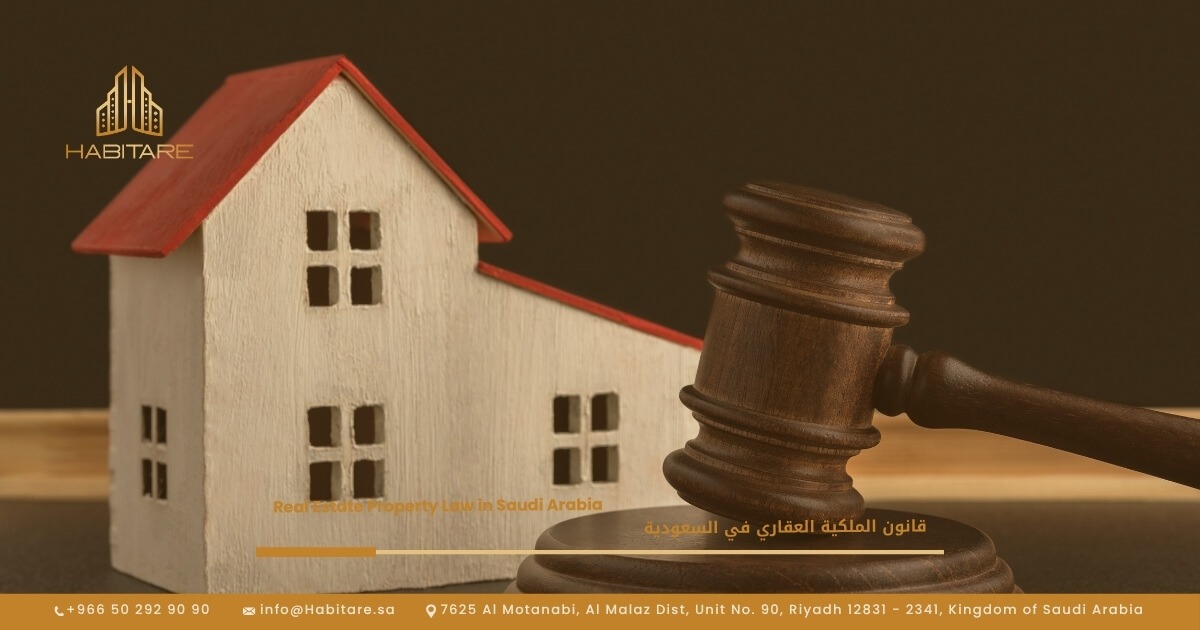
Buying property in Saudi Arabia is no longer simply a distant ambition. For the right buyer, it can be a tangible opportunity to build long term value in one of the region’s most dynamic real estate markets.
Understanding the legal framework is essential. Saudi Arabia Real Estate Ownership Law defines important ownership rights and responsibilities while helping buyers understand how to approach property ownership with greater clarity and confidence.
In this guide, Habitare Real Estate provides a clear overview of the key principles governing real estate ownership in Saudi Arabia, including ownership structures, applicable regulations, foreign ownership requirements, and the legal considerations that shape the buying experience.
What Is the Saudi Arabia Real Estate Ownership Law?
Saudi Arabia Real Estate Ownership Law provides part of the legal framework governing real estate ownership and the rights associated with property in the Kingdom.
The wider real estate regulatory framework also includes legislation governing real estate units, their subdivision and management, as well as the registration of real estate ownership and related rights.
For international buyers, understanding this framework is particularly important because ownership by non-Saudis is governed by specific requirements and geographical parameters.
The current Law of Real Estate Ownership by Non-Saudis establishes the framework under which eligible non-Saudis may own real estate or acquire other real rights within designated geographical areas.
The law also establishes specific provisions for Makkah and Madinah, where ownership by non-Saudi natural persons is limited to Muslims.
At its heart, the real estate legal framework is designed to create greater clarity, protect ownership rights, support investment, and strengthen confidence in the Kingdom’s evolving property market.
For buyers and investors, this clarity can make the difference between simply finding a property and making a well-informed real estate decision.
Types of Real Estate Ownership Under the Saudi Arabia Real Estate Ownership Law
The Saudi Arabia Real Estate Ownership Law and related regulations provide a structured framework for different forms of property ownership and real estate rights.
Understanding these structures helps investors and property owners assess how a property can be held, used, managed, transferred, or developed within the applicable legal framework.
1. Individual Ownership
Individual ownership means that a person owns a property in their own name and may exercise the rights associated with that ownership within the limits of applicable laws and regulations.
This can include residential, commercial, and other forms of real estate, depending on the buyer’s eligibility and the permitted use of the property.
For investors, individual ownership can offer flexibility in how a property is occupied, leased, developed, or transferred, provided all applicable requirements are met.
2. Joint Ownership of Real Estate Units
Joint ownership applies to properties containing separately owned units within a jointly owned real estate development.
Each owner may own an individual unit while sharing ownership of common areas and facilities with other unit owners.
These common areas can include entrances, corridors, elevators, and other facilities serving the development.
Saudi Arabia’s Law of Ownership, Subdivision, and Management of Real Estate Units establishes rights and responsibilities relating to subdivided units and common areas, helping create a more transparent framework for owners and communities.
3. Government Property
Government property includes land, buildings, facilities, and other real estate owned by the state.
Its use and disposition are governed by the applicable laws, regulations, contracts, and decisions of the competent authorities.
This framework protects public assets while supporting the organized use and development of government owned real estate.
4. Foreign Ownership
Non-Saudis may own real estate in Saudi Arabia subject to the requirements, geographical areas, ownership limits, and other controls established under the applicable legislation.
The Law of Real Estate Ownership by Non-Saudis provides the current framework for non-Saudi ownership and distinguishes between individuals, companies, investment funds, and other eligible entities.
For non-Saudi individuals, specific rules apply in Makkah and Madinah, where ownership is limited to Muslim natural persons.
5. Investment Ownership
Investment ownership refers to property acquired or held for investment purposes, including residential, commercial, industrial, and development projects.
Depending on the investor’s status and the nature and location of the property, ownership may be available to Saudi or non-Saudi investors under the applicable legal framework.
For international investors, this creates opportunities to participate in a market shaped by major urban development, growing demand, and the Kingdom’s broader economic transformation.

Key Laws Governing Real Estate Ownership in Saudi Arabia
Saudi Arabia’s real estate sector has developed a comprehensive legislative framework covering ownership, registration, property units, investment, and the rights of different market participants.
Understanding the key laws governing real estate ownership in Saudi Arabia and the Saudi investment laws and regulations is essential for anyone considering a purchase or investment.
The following are among the key areas of legislation relevant to property ownership.
1. Law of Ownership, Subdivision, and Management of Real Estate Units
This law regulates the ownership, subdivision, and management of real estate units within jointly owned properties.
It establishes the rights and responsibilities of unit owners and addresses common areas, owners’ associations, subdivision procedures, and the management of jointly owned real estate.
The framework is particularly relevant to buyers of apartments and other units within residential or commercial developments.
2. Law of Real Estate Registration
Real estate registration provides an official framework for recording ownership and real estate rights based on the property itself.
The Real Estate General Authority describes real estate registration as a system that records ownership, rights arising from ownership, and subsequent real estate dispositions through the Real Estate Registry.
This provides greater legal certainty for owners and helps create a clearer record of property rights, restrictions, obligations, and transactions.
For buyers, proper registration is a fundamental part of securing ownership and protecting the legal status of the property.
3. Law of Real Estate Ownership by Non-Saudis
This law establishes the current framework governing real estate ownership by non-Saudis in Saudi Arabia.
It defines who may qualify as a non-Saudi, identifies the geographical framework for ownership, and establishes provisions relating to real rights, ownership percentages, usufruct periods, and other controls.
It also contains specific provisions covering Makkah and Madinah and different categories of non-Saudi entities.
For international buyers, understanding this law is essential before selecting a property or beginning a transaction.
4. Real Estate Allocation and Investment Regulations
Saudi Arabia also regulates real estate investment and development through a broader framework covering investment structures, development activities, transactions, and the rights of market participants.
These regulations support the Kingdom’s objective of creating a more transparent and attractive real estate market while encouraging investment and sustainable development.
They also complement the broader Saudi real estate investment framework that is increasingly relevant to local and international investors.
5. Civil Law and Related Legislation
Civil law and related legislation provide additional rules governing property rights, obligations, contracts, and real estate transactions between individuals and organizations.
Together with sector specific real estate legislation, these rules help define the legal relationships between buyers, sellers, investors, developers, landlords, and other parties.
For sophisticated investors, understanding how these different layers of regulation interact is an important part of responsible property planning.
Property Ownership Requirements for Non-Saudis in Saudi Arabia
Foreign property ownership in Saudi Arabia is possible under a defined legal framework designed to provide eligible international buyers with clear routes to ownership.
The exact requirements depend on the buyer’s legal status, the location of the property, and the type of ownership or real right involved.
Key considerations include the following.
- Meet the applicable eligibility requirements: Buyers must fall within a category permitted to own real estate or acquire real rights under the applicable legislation.
- Confirm the geographical eligibility of the property: Non-Saudi ownership is linked to designated geographical areas and applicable controls. A property should therefore be verified before any transaction is pursued.
- Complete official registration: Ownership or the acquisition of real rights must be properly registered with the Real Estate Registry in accordance with the applicable provisions.
- Use the property for a permitted purpose: The ownership, use, development, or investment purpose of the property must comply with the applicable laws and regulations.
- Comply with all relevant real estate regulations: Buyers must satisfy the legal and procedural requirements applicable to their category, property, and transaction.
The current framework is designed to give international investors greater clarity while ensuring that ownership takes place within defined legal and geographical parameters.
Conclusion
Saudi Arabia Real Estate Ownership Law forms an important part of the Kingdom’s evolving real estate framework, helping define ownership rights, registration requirements, investment opportunities, and the conditions that apply to different categories of buyers.
For international investors, understanding this framework is not simply a legal exercise. It is an essential part of entering the Saudi real estate market with confidence and making decisions that align with long term goals.
Saudi Arabia today offers a distinctive combination of modern urban development, ambitious economic transformation, and an increasingly sophisticated real estate environment.
For those looking to make the Kingdom part of their investment journey, the right property can represent more than an asset. It can be a position within a rapidly evolving market and a new chapter in contemporary Saudi living.
Habitare Real Estate offers professional guidance to help you understand the market, assess suitable opportunities, and approach your property journey with greater clarity.
Contact Habitare Real Estate today to discover carefully selected real estate opportunities in Saudi Arabia and take the next step toward investing with greater confidence.
Edited by: Habitare Real Estate©
Sources:
Frequently Asked Questions About Real Estate Ownership Laws for Non-Saudis
What Is the Difference Between Real Estate Registration and Traditional Property Registration?
1- Real Estate Registration:
Real estate registration records ownership and real estate rights based on the property itself through the Real Estate Registry.
The system provides a structured record covering the property, owner, rights, restrictions, obligations, and subsequent transactions.
2- Traditional Registration:
Traditional approaches may rely more heavily on transaction documents and records between the parties without the same property-based registration structure.
Real estate registration therefore provides a more comprehensive framework for establishing and protecting property rights.
How Is Real Estate Ownership Transferred Electronically?
Electronic real estate transactions can be completed through the official digital services and systems designated for the relevant transaction.
The applicable process depends on the type of transaction, the parties involved, and the relevant legal requirements.
Buyers should ensure that all required documents, approvals, payments, and registration procedures are completed through official channels so that the ownership record is properly updated.