Comparison of Real Estate Investment in Saudi Arabia and the UAE
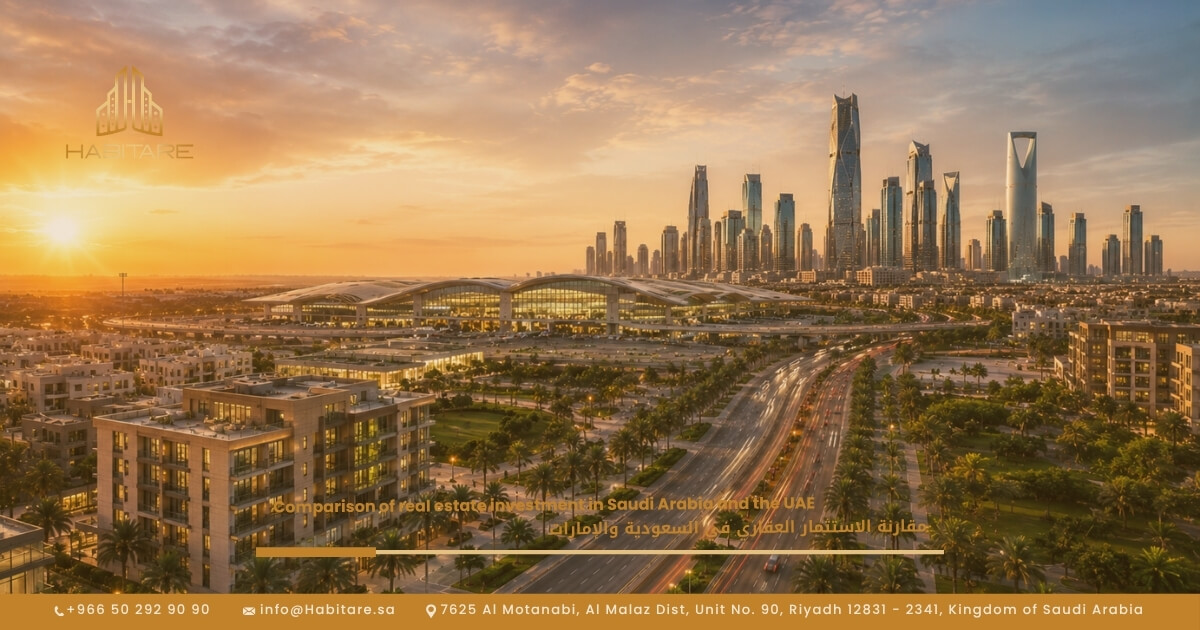
Comparison of real estate investment in Saudi Arabia and the UAE is increasingly important for investors seeking long-term growth, attractive returns, and strategic opportunities across the Gulf region.
Between the iconic skylines of the UAE and the transformative developments reshaping Saudi Arabia, investors are increasingly evaluating which market offers the strongest combination of growth, stability, and long-term value.
At Habitare Real Estate, we help local and international buyers navigate Saudi Arabia’s evolving property landscape through trusted expertise and refined market insight.
In this article, we present a detailed comparison of real estate investment in Saudi Arabia and the UAE, exploring returns, ownership regulations, growth prospects, and the factors that may influence your next investment decision.
Comparison of Real Estate Investment in Saudi Arabia and the UAE: Market Overview
Comparison of real estate investment in Saudi Arabia and the UAE begins with understanding the unique strengths of each market.
Real estate investment in Saudi Arabia is being driven by Vision 2030, major development projects, new economic cities, infrastructure expansion, and growing international interest.
These factors are creating diverse opportunities across residential, commercial, hospitality, and mixed-use sectors.
Real estate investment in the UAE benefits from a mature market environment, investor-friendly regulations, world-class infrastructure, and internationally recognized destinations such as Dubai and Abu Dhabi.
These cities continue attracting global capital and maintaining strong rental demand.
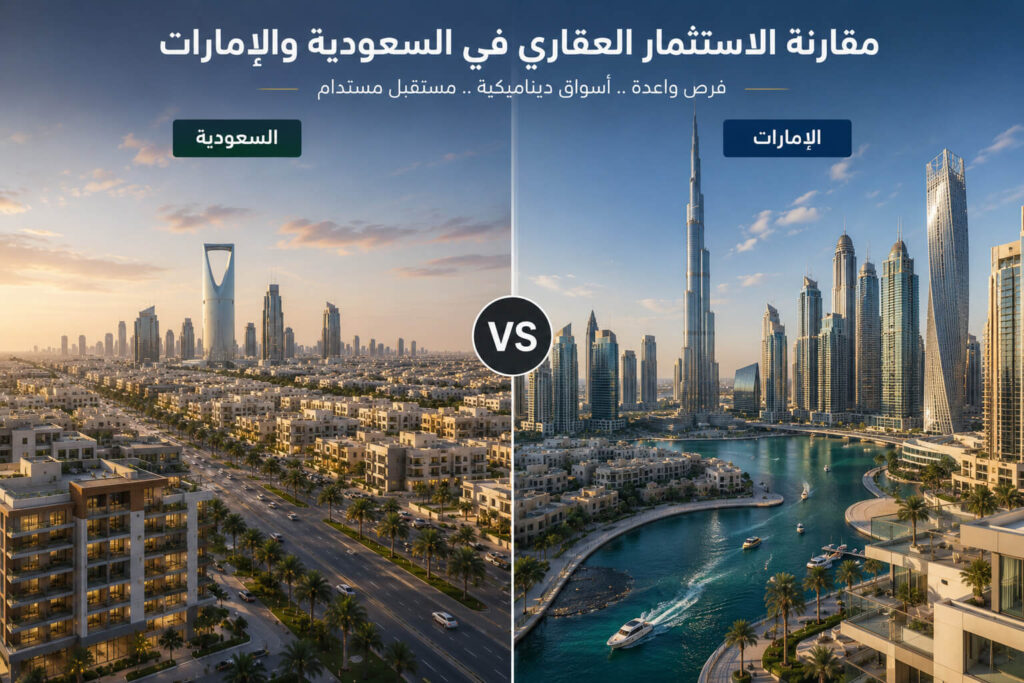
When conducting a comparison of real estate investment in Saudi Arabia and the UAE, Saudi Arabia stands out for future growth potential and emerging opportunities, while the UAE excels in market maturity, regulatory clarity, and established investment performance.
Investment Returns Comparison Between Saudi Arabia and the UAE
Gulf property returns differ across Saudi Arabia and the UAE, reflecting variations in market maturity, demand drivers, and long-term growth potential.
The UAE is generally recognized for stable rental income and established investment performance, while Saudi Arabia offers strong potential for capital appreciation as major projects continue transforming the Kingdom’s urban landscape.
These differences are influenced by demand levels, development activity, foreign ownership regulations, and the overall stage of market maturity.
Investment Indicator | Saudi Arabia | UAE
Average Annual Return | Approximately 5% to 9% depending on city and project | Approximately 6% to 11%, particularly in Dubai
Rental Yield | Strong demand in Riyadh and Jeddah supports attractive returns | Stable and consistent in Dubai and Abu Dhabi
Capital Growth | Higher growth potential driven by Vision 2030 and major developments | Steady growth within a mature market environment
Key Differences and Market Analysis
In Saudi Arabia, rising returns are closely linked to Vision 2030 initiatives and large-scale developments that continue creating new investment destinations and enhancing long-term capital growth.
The UAE offers a highly established property market supported by international demand, transparent regulations, and a strong reputation among global investors.
Regarding foreign ownership laws, the UAE provides long-standing freehold ownership opportunities in designated zones, while Saudi Arabia has progressively expanded ownership opportunities within approved projects and locations under a developing regulatory framework.
Foreign Ownership Laws and Regulatory Environment
Foreign ownership regulations remain one of the most important factors when determining the best country for real estate investment in the Gulf region.
Property taxes in the Gulf also influence investor decisions, as tax structures can significantly impact overall returns and market attractiveness.
1. Foreign Ownership Regulations in Saudi Arabia
Saudi Arabia has introduced significant reforms in recent years to support foreign investment and increase participation in its real estate sector.
International investors can acquire property within approved projects and designated areas, particularly in major cities and strategic developments.
These reforms align with Vision 2030 objectives aimed at attracting international capital while maintaining a balanced and sustainable market environment.
2. Foreign Ownership Regulations in the UAE
The UAE is widely regarded as one of the region’s most accessible markets for international property ownership.
Foreign investors can acquire freehold property in designated areas across cities such as Dubai and Abu Dhabi, supported by clear regulations and streamlined procedures.
The UAE also benefits from a relatively low tax environment, with no recurring annual property tax in most cases, strengthening its position among the most attractive real estate investment destinations in the Gulf.
Comparison of Real Estate Investment in Saudi Arabia and the UAE: Which Market Offers Greater Potential?
Comparison of real estate investment in KSA and the UAE highlights two highly attractive but distinct investment pathways.
The UAE offers market maturity, regulatory clarity, and reliable rental performance. Saudi Arabia presents exceptional growth potential supported by transformative projects, economic diversification, and one of the most ambitious development agendas in the world.
Neither market is universally better than the other. The ideal choice depends on whether an investor prioritizes stability, capital appreciation, recurring income, or long-term expansion opportunities.
At Habitare Real Estate, we provide professional guidance and market insight to help investors identify the opportunities best aligned with their goals across Saudi Arabia’s evolving real estate market.
Contact Habitare Real Estate today and speak with our specialists to discover carefully selected opportunities across Saudi Arabia’s most promising investment destinations.
Edited by: Habitare Real Estate©
Source:
Frequently Asked Questions
How Do I Choose Between Saudi Arabia and the UAE if My Budget Is Limited?
The answer depends on your primary objective.
The UAE may be more suitable for investors seeking relatively stable rental income from smaller units in mature locations such as Dubai.
Saudi Arabia may be more attractive for investors focused on medium and long-term capital growth, particularly as large-scale projects continue expanding across the Kingdom.
Can Investors Generate Passive Income Quickly Through Gulf Real Estate?
Yes, although timelines vary between markets.
In the UAE, strong demand for both short-term and long-term rentals can often generate passive income more quickly.
In Saudi Arabia, passive income opportunities are growing rapidly, though some developments may require additional time to reach full occupancy and market maturity.
Is Now the Right Time to Invest or Is It Better to Wait?
Current market conditions offer compelling opportunities in both countries.
The UAE provides immediate access to a mature and established investment environment, although entry prices may be higher.
Saudi Arabia remains in a growth phase, allowing investors to participate early in transformative projects that may generate significant long-term value as Vision 2030 initiatives continue advancing.