Investing in Agricultural Real Estate in Saudi Arabia
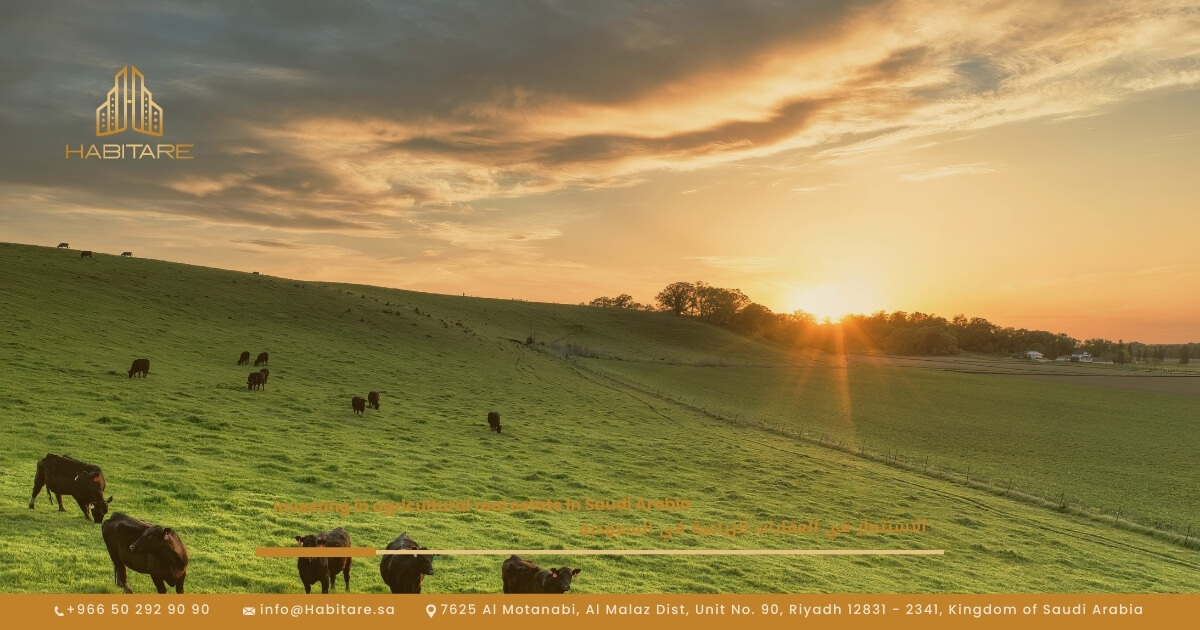
Between fertile valleys and flourishing farms, the Kingdom is shaping a sustainable future where land heritage meets Vision 2030. Investing in Agricultural Real Estate in Saudi Arabia has emerged as a strategic pillar of national growth.
Saudi Arabia continues to unlock large scale agricultural investment opportunities as part of a broader vision that prioritizes food security, rural development, and long-term sustainability.
This progressive landscape creates fertile ground for investors seeking stable, purpose driven assets.
In this guide by Habitare Real Estate, we explore Investing in Agricultural Real Estate in Saudi Arabia through its advantages, asset types, prime regions, and the evolving regulatory framework shaping this promising sector.
Investing in Agricultural Real Estate in Saudi Arabia
As part of the Kingdom’s economic diversification, Investing in Agricultural Real Estate in Saudi Arabia offers a compelling alternative to traditional asset classes.
The sector blends financial performance with environmental and social impact, aligning with global investment trends.
What Is Agricultural Real Estate?
Agricultural real estate refers to land and properties dedicated to farming, livestock production, agricultural technology, and rural tourism. These assets combine productive use with long term land value appreciation.
In Saudi Arabia, agricultural real estate spans fertile plains, mountain terraces, and oasis regions, each offering distinct operational and investment potential.
Advantages of Investing in Agricultural Real Estate in Saudi Arabia
1- A Growing Income Stream
Agricultural properties evolve from passive land into multi-income platforms. Returns may be generated through crop production, livestock operations, or leasing farmland to specialized operators.
2- Long Term Capital Appreciation
With rising global focus on food security and sustainability, arable land continues to gain strategic value. Population growth and demand for premium local produce further strengthen long term price fundamentals.
3- Strong Government Support
Unprecedented incentives support the sector, including Agricultural Development Fund financing, organic farming programs, and streamlined investment platforms. These initiatives confirm agriculture as a national priority.
Types of Agricultural Real Estate in Saudi Arabia
1- Rural Tourism Farms
These properties blend agriculture with hospitality, offering immersive rural experiences through orchards, heritage farmhouses, and eco lodges that celebrate local culture.
2- Farmland
Saudi farmland includes plains, oases, and highland zones suitable for strategic crops, with additional land available for reclamation and tailored development.
3- Agricultural Nurseries and Laboratories
Focused on innovation, these assets produce palm seedlings, fruit trees, ornamental plants, and advanced plant tissue cultivation, supporting resilient and high-quality agriculture.
4- Livestock Farms
Livestock properties support national food security through cattle, sheep, camel, poultry, and dairy production, supplying fresh meat and dairy products.

Best Regions for Agricultural Real Estate Investment
1- Al Qassim Region
Often described as the Kingdom’s food basket, Al Qassim has attracted major transactions, including the recent sale of a two million square meter site north of Buraidah exceeding SAR 50 million. Values vary by water access, road connectivity, and existing cultivation.
2- Al Baha Region
Al Baha is rapidly emerging as a specialized agricultural zone. Recent government offerings include four Arabica coffee farming cities and a dedicated prickly pear agricultural city.
3- Hail Region | Investing in Agricultural Real Estate in Saudi Arabia
The Ministry of Environment, Water, and Agriculture recently introduced 43 investment sites across Hail, enabling activities ranging from farming and livestock to aquaculture and eco-tourism.
4- Other Promising Areas
Taif is renowned for roses and fruit farms, Jazan for mango and banana production, and Al Ahsa as the world’s capital of palm cultivation. Each region presents unique agricultural identity and opportunity.
Legal Framework and Regulations for Agricultural Real Estate in Saudi Arabia
Investment in agricultural real estate in Saudi Arabia is governed by several legal frameworks, including:
- The Municipal Property Regulations, which oversee the sale, purchase, and leasing of properties, including agricultural land, within municipal boundaries.
- The Executive Regulations for Organic Farming Standards, setting the requirements to obtain organic certification for agricultural products.
- The Executive Regulations for Foreign Ownership, effective January 2026, which organize foreign investment broadly, including investment in agricultural real estate.
Conclusion | Investing in Agricultural Real Estate in Saudi Arabia
Investing in Agricultural Real Estate in Saudi Arabia is more than an acquisition. It is participation in a national journey toward food security, environmental stewardship, and sustainable prosperity.
This sector unites financial performance with meaningful impact, where each cultivated hectare and planted tree contributes to a greener future. If you are considering entering this refined investment landscape, Habitare Real Estate stands ready to guide you from feasibility to execution.
Contact us today to begin your agricultural investment journey with confidence.
Edited by: Habitare Real Estate ©
Sources:
- Istitlaa Platform
- Al Eqtisadiah Newspaper
- Ministry of Environment, Water, and Agriculture
- National Center for Archives and Records
FAQs
What are the best areas to invest in agriculture in Saudi Arabia?
Regions such as Al Qassim, Al Baha, Hail, Taif, Jazan, and Al Ahsa are among the most attractive due to climate diversity and government support.
Can foreigners buy farmland in Saudi Arabia?
Yes. Foreign investors may own farmland required for licensed agricultural activities in accordance with Saudi regulations.